Why TARIAN Chooses Acetate — and Why It Matters
Acetate is not a compromise. It is a conviction.
At TARIAN, every frame begins with a material. Not a trend, not a production logic — a material. And that material is always acetate. This is what separates a genuine piece of French eyewear from a commodity object: the decision, made at the very beginning, to start with substance rather than appearance.
This choice is not conventional. It is the result of a belief that elegance and responsibility are not opposites, that a beautiful object must also be an honest one. Acetate carries this conviction naturally. That is why it is at the heart of every pair of luxury glasses we design.
A living material, born from nature
Acetate is derived from natural, renewable fibres — cotton and wood — collected, dried, ground and transformed into granules before being pressed into sheets. The result is a material that feels closer to silk than to plastic: soft against the skin, light on the face, breathable in wear. It is the defining material of premium optical frames precisely because it cannot be faked — its depth, its warmth, its behaviour in light are properties that synthetic alternatives can only approximate.
Unlike synthetic alternatives, acetate is hypoallergenic, making it suitable for all skin types, including the most sensitive. And because it is biodegradable, it carries a lower environmental footprint than most materials used in eyewear today.
Its durability also has environmental consequences: a frame that holds its shape, resists impact and does not fade reduces the frequency of replacement — and therefore of waste.
Colour that runs through the material, not across it
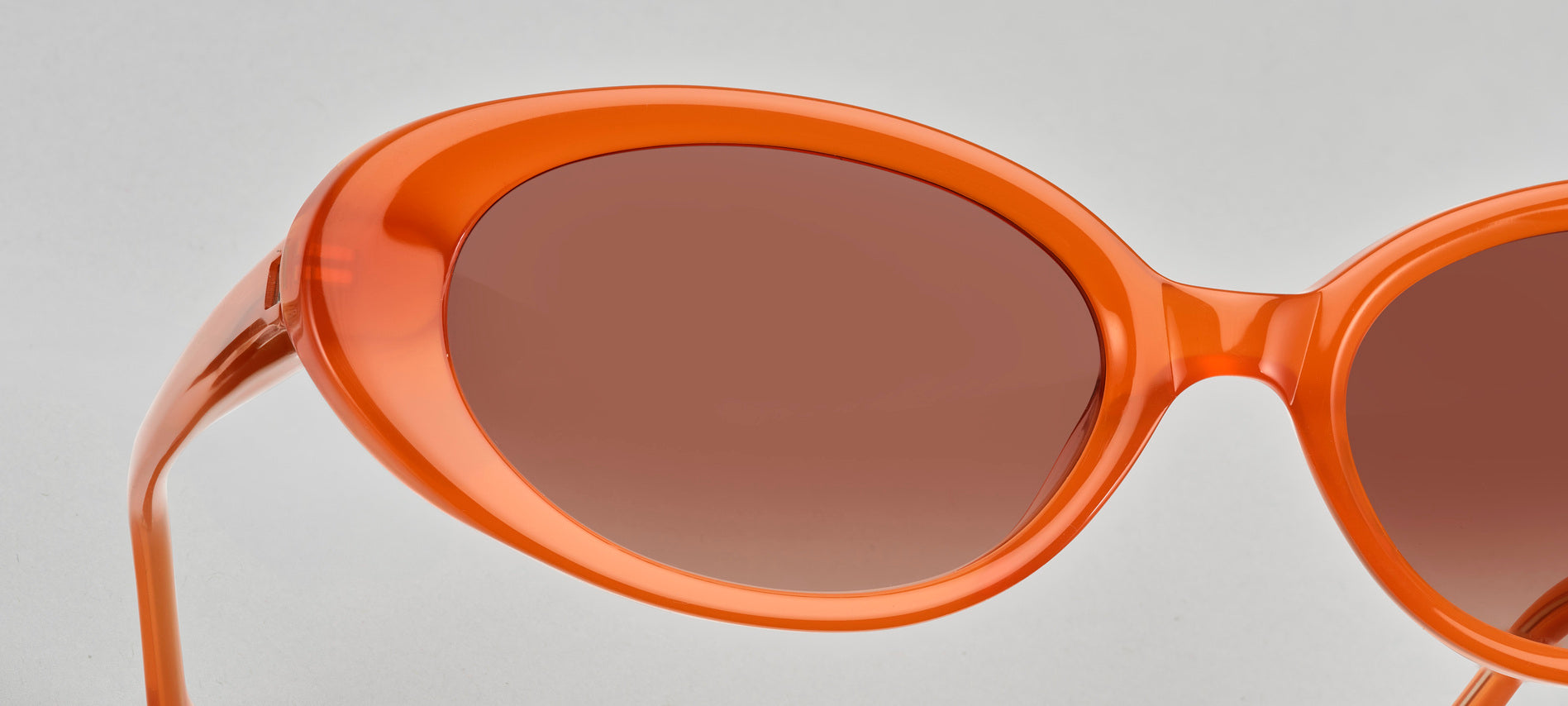
What sets acetate apart visually — and what makes it the foundation of serious designer glasses — is what happens inside it. Its varying degrees of transparency allow light to pass through, be filtered and transformed. Colour is not applied to the surface — it runs through the material itself.
This is why TARIAN acetate frames catch the light differently at every angle. The nuances have depth. The gradients are not printed — they are inherent to the slab from which the frame is cut.
Almost half of the acetates used in TARIAN frames are developed exclusively for the brand — colours, transparencies and depths found nowhere else. Each shade is a deliberate choice, made in collaboration with Mazzucchelli, one of Italy's most respected acetate producers, whose craftsmen have worked this material for generations.
From sketch to frame: six to twelve months
Every TARIAN frame begins with a drawing — made by hand by Jérémy Miklitarian in his Paris eyewear atelier. The drawing determines the shape, the volume, the proportions. Once the acetate is selected, the work begins.
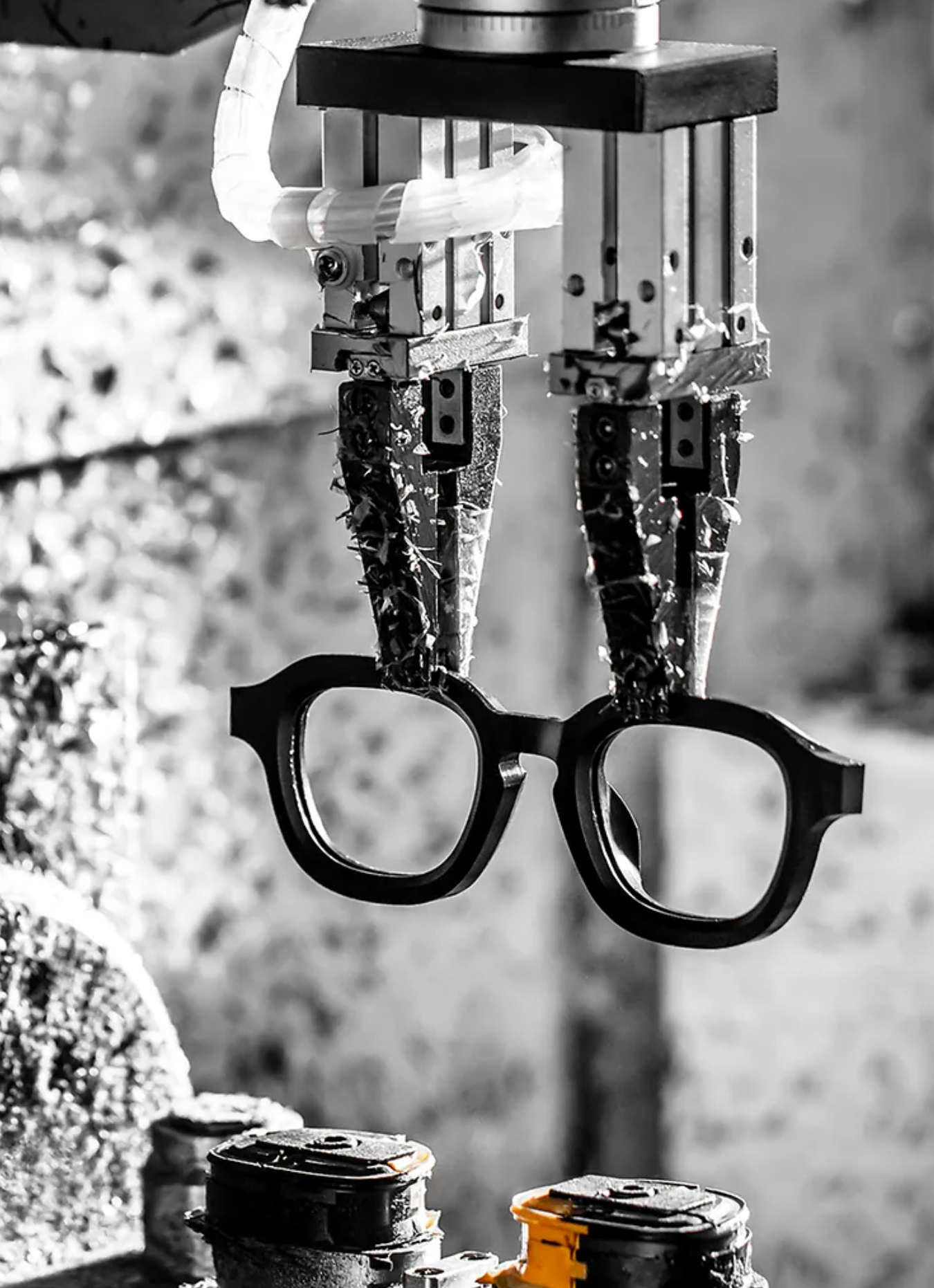
Acetate is a demanding material. It requires expertise across many stages — cutting, shaping, polishing, assembly — each performed by hand. It also requires time: between the first prototype and the finished frame arriving at the atelier, six to twelve months pass. The material must cure. The process cannot be rushed. This is what handmade glasses actually means — not a marketing phrase, but a constraint that shapes the entire design process.
The result is a frame that is sculpted, not moulded. Polished, not coated. Assembled by hand, in a gesture that reveals the natural beauty of the material as much as it guarantees its solidity.

A limited edition of 500 — by design, not by marketing
Each TARIAN model is produced in a controlled run of 500 numbered pieces. This is not a marketing device. It is the direct consequence of how the frames are made: artisanally, from a material that demands time, care and expertise at every stage. Among independent eyewear brands, few go this far — producing truly limited quantities, individually numbered, from materials developed specifically for the brand.
500 pieces per model. Each one numbered. Each one made from acetate sheets chosen for their specific colour, depth and character.
Not all acetates are equal
In the world of luxury eyewear, the material is not merely a contributor to the aesthetic identity of the frame. It inhabits it, constructs it, guides its story.
At TARIAN, acetate is selected for its density — denser than standard, more generous in the hand, deeper in colour. It holds its shape over time. It resists scratches, impact and chemicals. It does not yellow. It does not become brittle. This is the standard that defines premium optical frames — not the price alone, but the quality of what you hold in your hand.
Our frames do not only tell a story of craftsmanship. They carry the conviction that a beautiful object should also be a responsible one — and that the two have never been in contradiction.