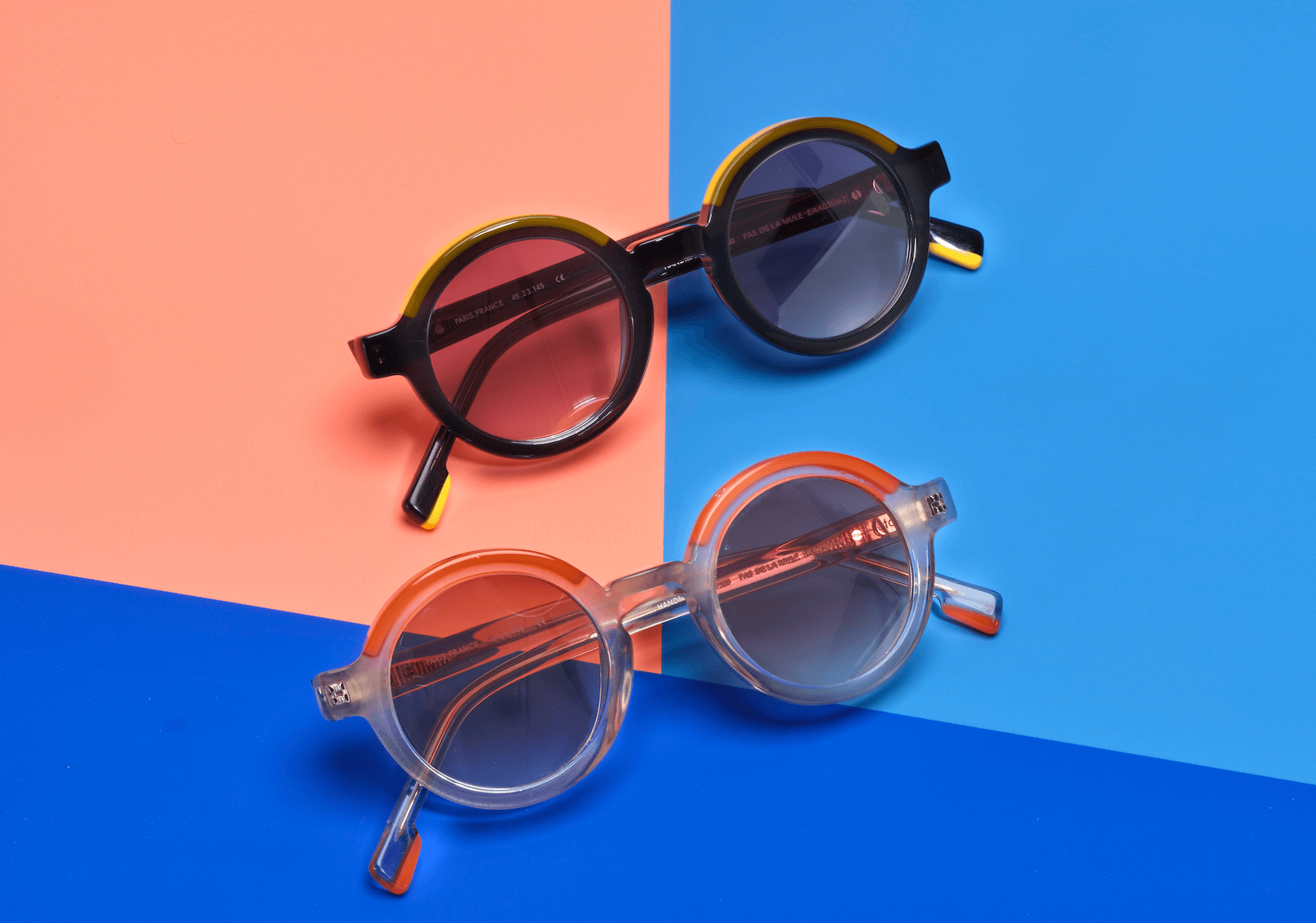

Why Wearing Original Eyewear Is Worth It
There is a version of this argument that leads with exclusivity and ends with price. That is not the argument here. The case for wearing original, well-made frames — independent eyewear from a designer with a clear point of view — is more straightforward than that. It is about the experience of wearing a good object every day.
What you notice first
The first thing you notice about a well-made pair of luxury glasses is the weight — or rather, the absence of it. Premium optical frames designed properly distribute load across the face, rather than concentrating it on the nose and temples. You put them on in the morning and they settle into place. You stop noticing them.
This is harder to achieve than it sounds. It requires precision at every stage: the design of the bridge, the positioning of the nose pads, the angle of the temples, the calibration of the hinge. In handmade glasses built by artisans who have spent careers understanding these details, the result is consistent. In mass-produced frames optimised for cost, it is not.
The material question
Most commercial eyewear is made from injected plastic. The material is fine — but it has limitations. It cannot be adjusted after manufacture. Its colour does not have depth. It shows wear quickly, and it cannot be polished back.
High-density acetate — the material used in serious French eyewear — behaves completely differently. It can be adjusted by an optician. Its colour runs through the material, not across it. It develops a patina over time rather than degrading. It can be polished. A good acetate frame, properly cared for, looks better at five years than it does at five months.
This matters because designer glasses are not seasonal objects. They are worn every day, in every context, for years. The material makes that experience either better or worse.
The hinge
The hinge is where most frames fail. A traditional screw hinge, under daily use, will eventually loosen, strip or break. The screw is small, the thread is fine, and the mechanical stress is constant. A flex hinge — like the AXIS hinge designed by TARIAN — eliminates this failure point by removing the screw entirely. The mechanism adapts to the face and absorbs movement rather than resisting it.
This is the kind of engineering decision that distinguishes independent eyewear designed with genuine intent from frames produced to a price point.
Wearing something made with care
There is also something harder to quantify. When you wear Paris eyewear from an independent atelier — frames drawn by hand, made by artisans in Italy, produced in an edition of 500 numbered pieces — you are wearing an object that was made with care. That care is legible. It shows in the finish, the fit, the way the frame moves.
This is not nostalgia for craft. It is a preference for objects that were made to last, by people who intended them to last. Luxury glasses at this level are not aspirational accessories. They are good objects. The distinction is important.
The long view
The cost of a well-made pair of luxury sunglasses or optical frames, spread across five or seven years of daily wear, is lower than it appears. A cheaper frame replaced every eighteen months costs more over the same period — and provides a worse experience throughout. Original eyewear from a brand with a clear commitment to materials and construction is not an extravagance. It is an economically sensible choice that also happens to be a better-looking and more comfortable one.