
The Art of Choosing Your Sunglasses Lens Colour
The lens colour of a pair of luxury sunglasses does two things simultaneously: it determines how you see the world, and how you are seen. The first is a technical decision. The second is an aesthetic one. Both deserve the same care.
How lens colour affects vision
Different tints filter light differently. This is not a minor distinction — choosing the wrong lens for your primary use case will make your luxury eyewear less useful, regardless of how well the frame is made.
Grey lenses reduce overall brightness without significantly altering colour perception. What you see is essentially what is there, only darker. This makes grey the most versatile choice for general use — driving, urban environments, variable conditions.
Brown and amber lenses enhance contrast by filtering blue light. They make edges sharper, colours warmer, and distances easier to read. Excellent for outdoor activities, particularly in bright or hazy conditions where contrast is everything.
Green lenses sit between grey and brown — good contrast without the warm shift of amber. A classic choice for designer glasses worn in bright sun with no specific activity requirement.
Yellow and orange lenses are for low-light conditions — overcast days, early morning, skiing. They amplify contrast dramatically but are not suitable for bright sun.
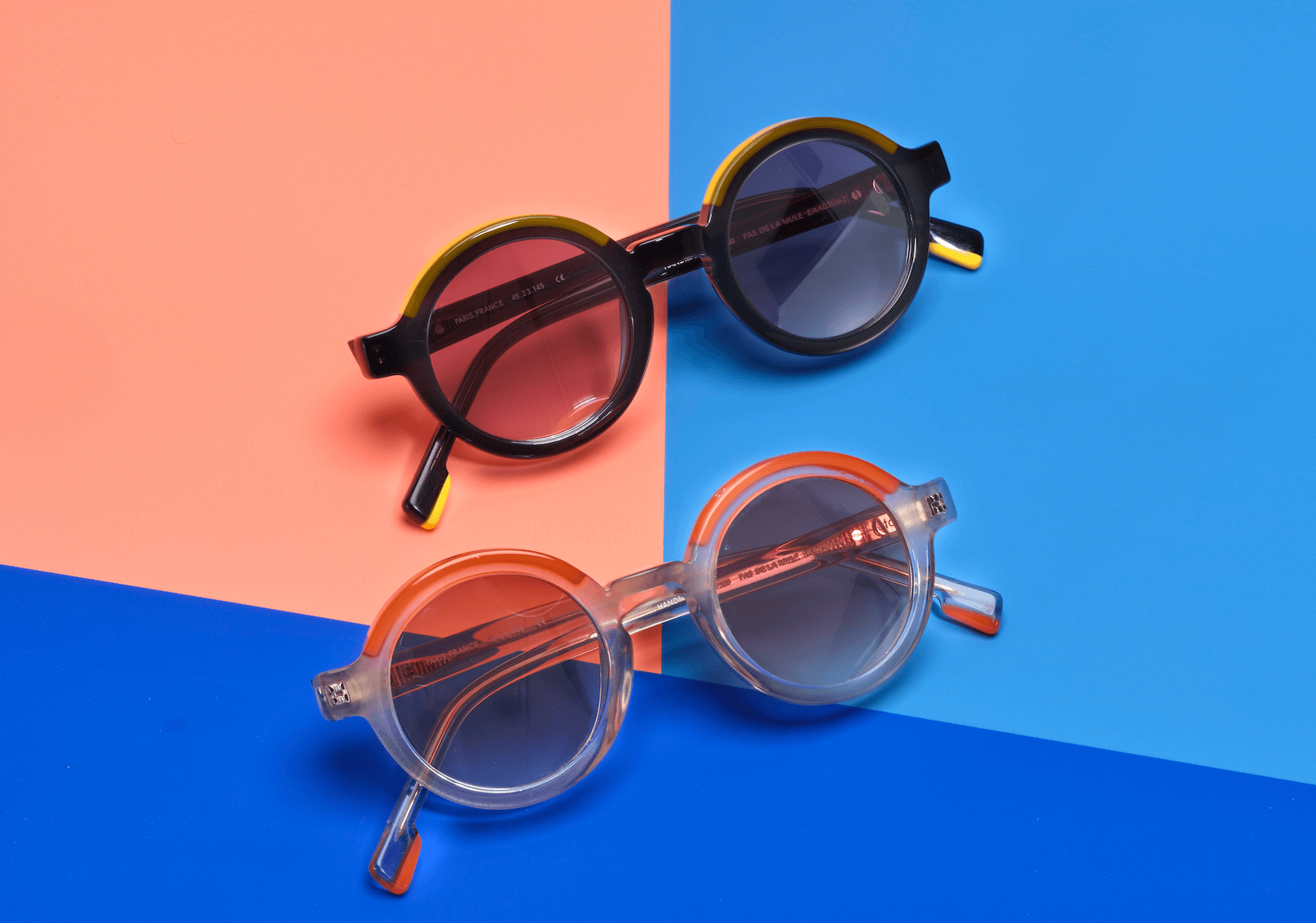
Gradient lenses — darker at the top, lighter at the bottom — are strong overhead and clear below. Well suited to driving, where you need sun protection from above but clarity for the instrument panel and road immediately ahead.
Polarised vs non-polarised
Polarisation eliminates horizontal glare — reflections from water, wet roads, glass surfaces. For the beach, on the water, or in conditions where glare is the primary problem, polarised lenses are significantly more comfortable. They are standard in serious luxury sunglasses collections.
The anti-reflective interior treatment applied to gradient lenses in TARIAN's La Croisière collection eliminates internal reflections from the lens surface itself — a detail that matters in bright light, where untreated lenses can create distracting internal glare.
Lens colour and frame colour
The relationship between lens and frame colour is one of the design decisions that separates thoughtful Paris eyewear from commodity sunglasses. A frame and lens that fight each other — warm frame, cold lens, or a tonal mismatch — creates visual noise. A frame and lens chosen together create coherence.
In TARIAN's handmade glasses, the lens colours available for each frame are selected in relation to the acetate. The amber and crystal tones of La Croisière are not arbitrary — they are chosen for their relationship with the warm and translucent acetate palette of the collection. This is what French eyewear design at the level of independent eyewear looks like in practice.
The final consideration
Lens colour is one of the few aspects of premium optical frames and sunglasses that affects how you experience the world, not just how you appear in it. Choose a grey lens and the world stays true. Choose amber and it warms. Choose gradient and the sky darkens while the street stays clear.
This is worth thinking about. The lens colour you choose shapes your visual experience for every hour you wear the frame.