
A Brief History of Eyewear: From Utility to Luxury
Eyewear has one of the more unusual histories in the world of objects — a tool that gradually became a statement, then a craft, then for some makers a genuine art form. Understanding where it came from helps explain what serious luxury glasses are today, and why the distinction between a well-made frame and a commodity product is not merely commercial.
The beginning: pure function
The first eyeglasses appeared in northern Italy around the late 13th century — simple convex lenses held together with a rivet, balanced on the nose. There were no temples. The frames were made from horn, bone, leather or wood. They corrected farsightedness. Nothing more.
For several centuries, the design barely evolved. Lenses improved. Materials diversified. But the fundamental form — two lenses, one bridge — remained essentially the same. Eyewear was utility.
The 18th century: temples and refinement
The addition of rigid temples, extending over the ears to hold the frame in place, transformed the object. It could now be worn without being held. This changed how it was made and what it could become — and it is in this period that the first craft traditions around eyewear begin to emerge, particularly in England and France.
Paris eyewear, even then, carried a certain distinction. The optical shops of the Palais Royal in the late 18th century were among the most refined in Europe.
The 19th and early 20th century: industrialisation
The industrial revolution brought mass production to eyewear. Metal frames could be stamped and assembled at scale. The craft traditions that had developed over the previous century began to compete with factories. Quality diverged — the best maker-produced frames became more refined; the cheapest mass-produced frames became thinner and more disposable.
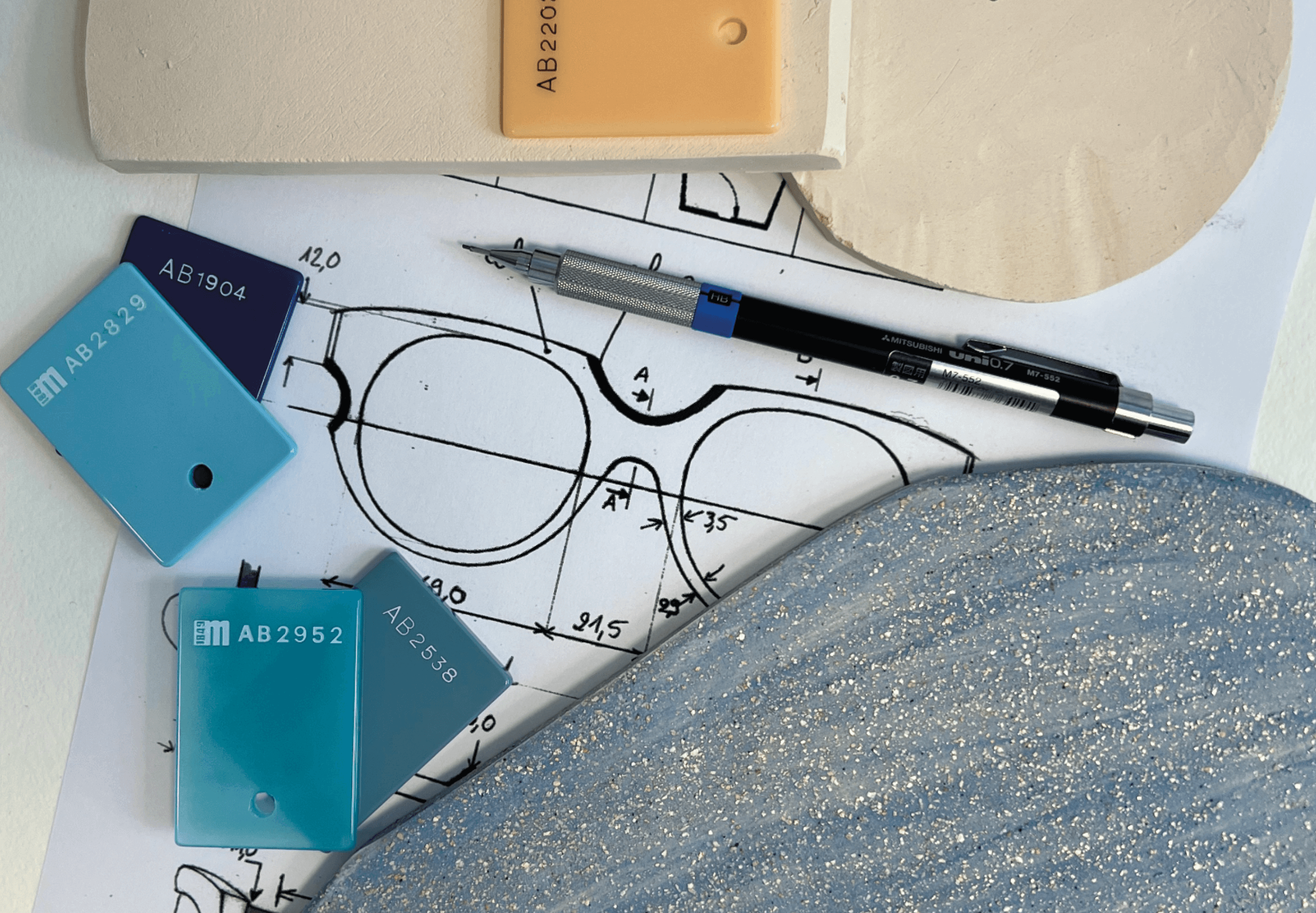
Celluloid arrived in the early 20th century, allowing coloured and patterned frames. Then acetate, derived from natural cellulose fibres, offered better stability, richer colour, and the possibility of a material that could be crafted — cut, polished, assembled by hand — rather than simply moulded. Acetate became the material of choice for handmade glasses of quality.
The mid-20th century: designer glasses emerge
In the postwar period, eyewear began its transition from corrective tool to fashion object. Opticians and designers began to collaborate. Frames appeared in fashion magazines. The idea that a frame could be chosen for aesthetic reasons — not merely optical ones — became mainstream.
This is the period in which the category of designer glasses as we now understand it was born: a frame made with intention, from considered materials, in a specific aesthetic language.
The present: independent eyewear and the return to craft
The past two decades have seen a significant shift. Alongside the large luxury conglomerates that dominate commercial eyewear, a generation of independent eyewear designers has emerged — makers who approach the object with the rigour of traditional craft and the vision of contemporary design.
French eyewear has been central to this shift. Paris, with its long tradition of precision craft and its proximity to the best European acetate and titanium suppliers, has produced some of the most considered independent eyewear of the current period.
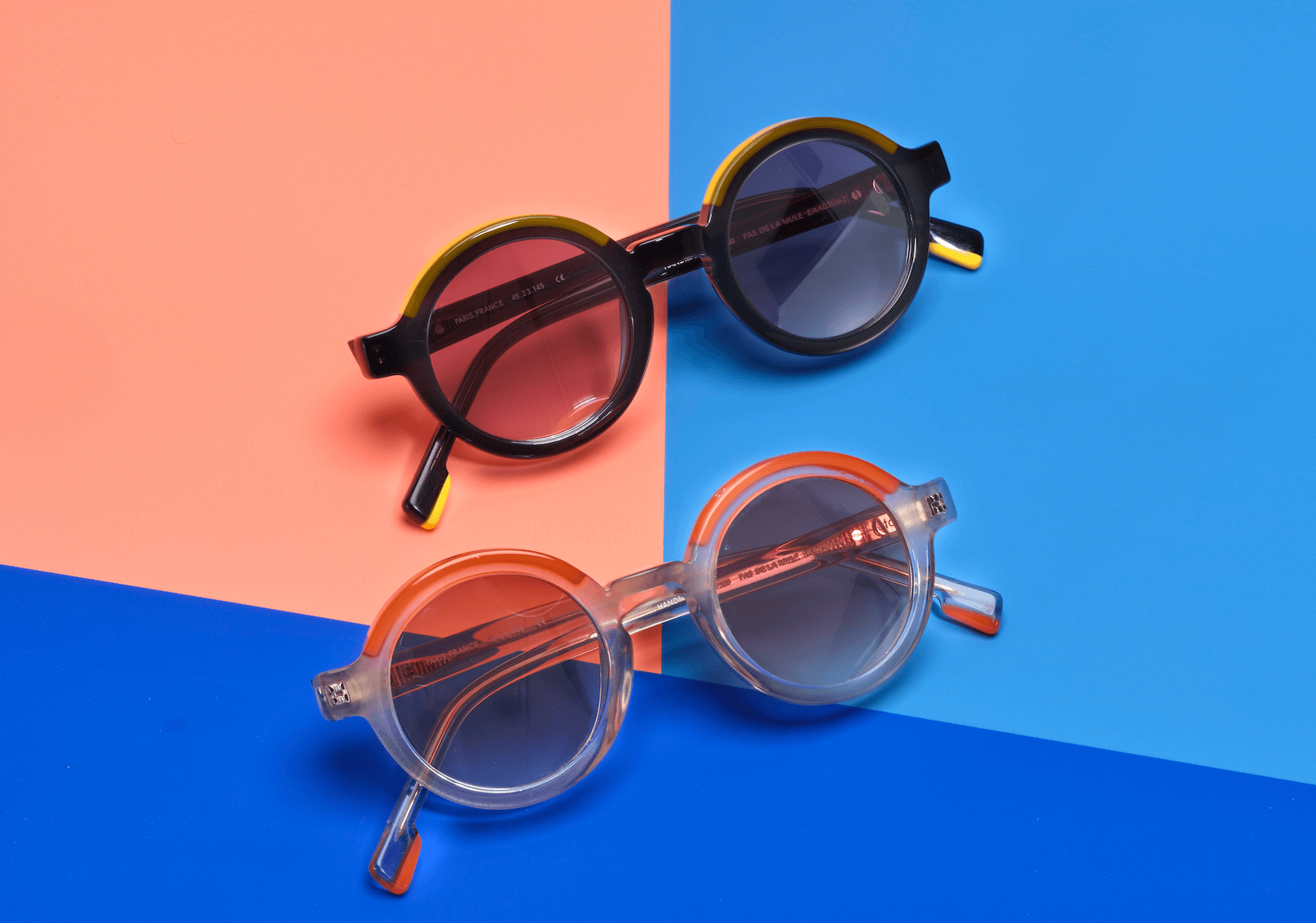
TARIAN is part of this tradition. Founded in Paris, making its frames in Italy with acetates developed specifically for the brand, producing each model in a controlled edition of 500 numbered pieces — it represents a particular position: that premium optical frames are worth making properly, and that the person wearing them deserves an object built to last.
The history of eyewear is a history of objects gradually becoming worthy of the faces they sit on. The best luxury glasses today are the continuation of that long, slow refinement.